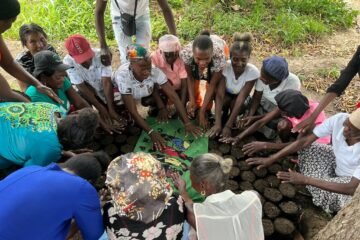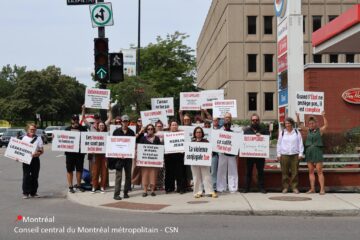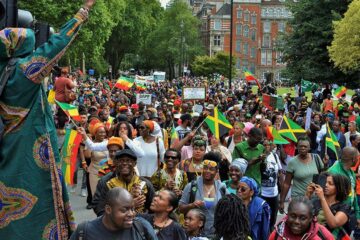
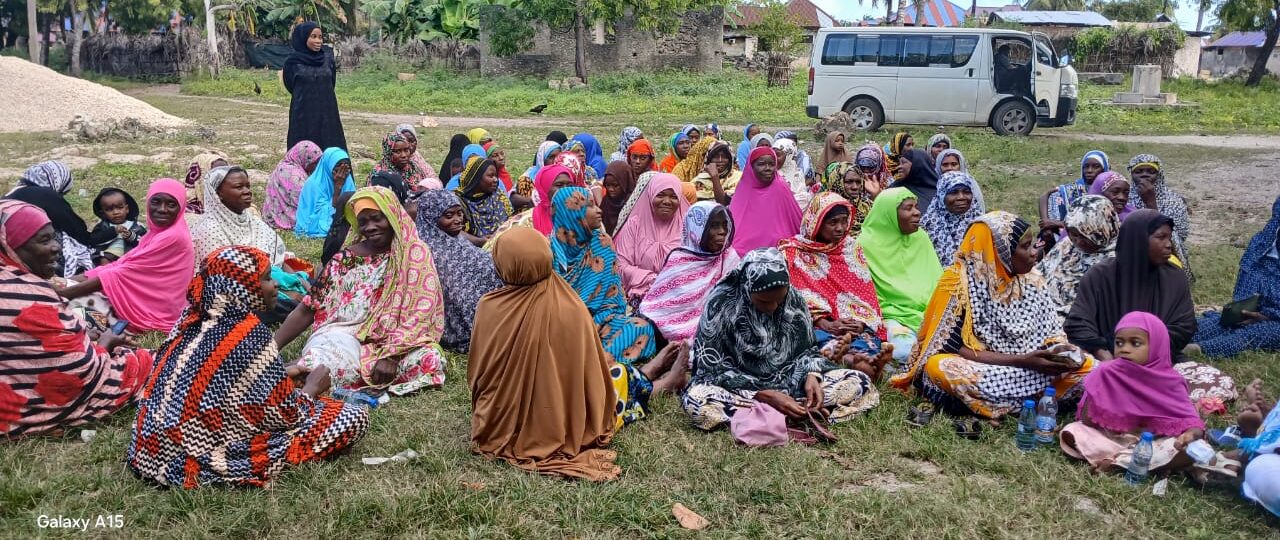
In 2025, during the 6th International Action of the World March of Women, we had a feminist economy training in Tanzania. We brought together almost 30 young feminists. Last week, I received a call from one of the participants of that feminist economy training. She told me about how that day impacted her with skills and knowledge. This is one of the direct links between our sisters and the movement.
The feminist economy is our agenda in Tanzania. We believe that if women have the capacity to generate their income, it can help them to avoid a lot of things, including gender-based violence and poverty. So we work to improve our skills and the skills of the women surrounding us: entrepreneurship and financial skills. Apart from peace, climate change, and other issues, these are our focus for now. Today we are commemorating the African Women’s International Day, and many activities will happen around the continent.
On the continent, women are really affected by climate change, and there’s a narrative problem within the community; the discourse makes it look like they are the ones who are destroying the environment. They are getting the blame because women are cutting firewood for their houses, for example. But according to our report, in Tanzania, women are almost 80% of the ones producing food and doing the everyday activities of farming. So if the climate is not stable, if it is not clear, if there is a drought, women are the most affected — economically, socially, healthily. Apart from that, we still have political conflict; we have armed conflicts in Congo and civil war in Sudan, and in some parts of Somalia. It is quite hard, and the women are really marginalized and affected by those issues.
And the big thing we find around communication and narrative, while implementing this work on climate change adaptation and women in leadership, is that the media is not amplifying women’s voice as a key actor in protecting the environment. Also as the ones who have the tools to adapt to those climate change issues. My organization, the Tanzania Media Women’s Association in Zanzibar (TAMWA-ZNZ), works on creating awareness in the community on how to adapt to climate change and with women who are ToT, trainers of trainers. At the same time, we are working with the media to amplify women’s voices. So we train the cohort of almost 30 journalists on how to report on the issue of women and climate change: how women are champions on climate change issues, how women cope with the challenges of climate change, what are the laws, how are the policies and all these things.
We are working with all the media outlets, from mainstream media to the community radios that are the most present in the community areas to social media. Sometimes they are speaking even their languages.
In the villages women don’t want to speak for many reasons. The journalists need to have a commitment to make sure that the story has all the people. Because of the patriarchal system and the life system of most African countries, women are raised as mothers, as wives, and as indoor people, not as leaders or speakers. So we must emphasize the importance of their voices.
For that, we also train the women to engage with the media and how to use the media to tell their stories and their challenges. Nowadays, they are the ones calling journalists. These women have the capacity to link all sorts of issues. They will speak about climate change issues, but they can go beyond. They will denounce gender-based violence, health issues, lack of public policies.
I am a journalist also, and we have a communication team of the WMW here in Tanzania, which is a part of the communication team of Africa. So I am trying to encourage these women, these young feminists, to work hard. I used to be a very popular presenter on the radio, so I really use this energy of mine to empower young feminists to be active, to stand, and to talk.

Sophia Ngalapi, known in the movement as Binti, is a journalist from Zanzibar, Tanzania. She is part of the National Coordinating Body of the World March of Women in Tanzania and a member of its International Committee, representing English-speaking Africa. She works with the Tanzania Media Women Association on women’s and children’s rights, climate change adaptation and community communication.