Bolivia is living through historic days of political struggle in the streets: large Indigenous marches, road blockades, and hunger strikes protesting the government of Rodrigo Paz. Popular organizations are demanding his resignation, accusing him of betraying the people’s vote that brought him to the presidency of the Plurinational State. Rodrigo Paz’s government has aligned itself with privileged sectors linked to large private corporations and interests that promote neoliberal policies across southern Latin America.
Paz has made clear his alliance with the so-called “Americas Shield,” under the aegis of the United States government, which now coordinates not only the discourse but also the actions of governments against social movements and the sovereignty of peoples.
The measures adopted by the Bolivian government contradict the promises made by Paz before taking office. Since his first decree, he has benefited the country’s wealthy elites by eliminating the tax on large fortunes. The president has been imposing decrees without respecting democratic procedures, without consultation, without public debate, and always to the detriment of the most impoverished sectors of the population. His economic policy opens the door to transnational corporations and the greed of powerful local groups.
Among the most critical aspects of these plans are measures to protect and promote investment in order to attract foreign capital with legal and tax stability for 15 years, fast-track approval mechanisms, and the opening of strategic sectors such as mining, fossil fuels, agribusiness, and transportation. In response, a major popular mobilization took place for 16 days, from December 17, 2025, to January 11, 2026. Through this struggle, the people reaffirmed that “Bolivia is not for sale.”
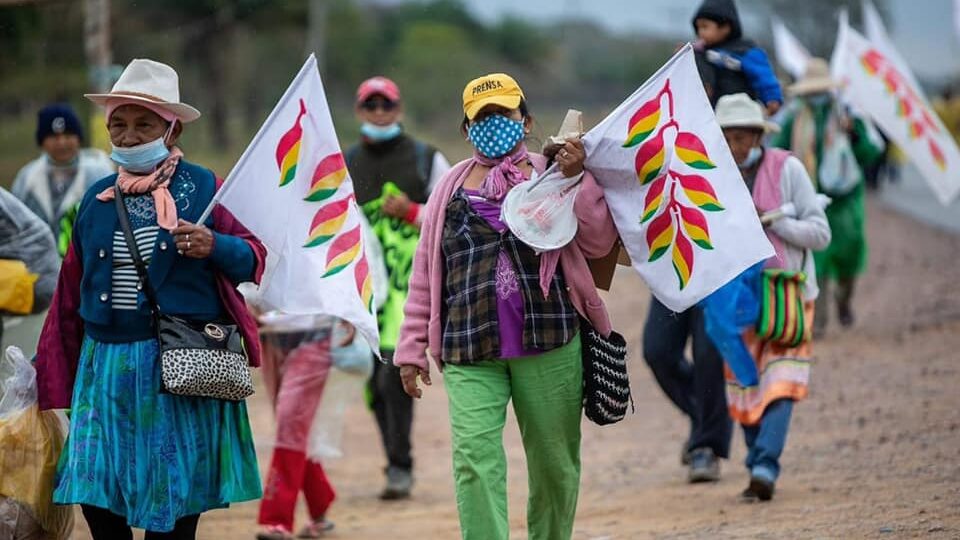
One example of the people’s mobilization was the Indigenous march held in the Bolivian Amazon. The protest resulted in the partial repeal by Paz’s government of a law that sought to reform the agrarian structure in favor of large agribusiness companies and land speculators in the eastern part of the country. The proposal aimed to convert “smallholdings” into “medium-sized properties” under the pretext of facilitating access to bank credit. In practice, this would have led to the dispossession of Indigenous peoples’ lands due to their inability to pay bank interest rates, which are often abusive.
The march of the Indigenous peoples of the Bolivian Amazon inspired a nationwide mobilization of the working class, peasant organizations, and urban popular sectors organized through the Bolivian Workers’ Center (COB), the Unified Syndical Confederation of Peasant Workers of Bolivia (CSUTCB), neighborhood councils, and self-organized grassroots movements. Together, they are carrying out an indefinite general strike and nationwide road blockades that have now lasted around 40 days.
The so-called gasolina basura (“contaminated fuel”), which caused serious damage to vehicles in both the public and private sectors, was one of the factors that intensified the conflict. The government suspended fuel subsidies, citing an economic emergency. The result was a generalized increase in prices: public transportation, basic food baskets, and food products all became more expensive.
Popular Struggle and Resistance to Repression
Collective outrage has grown day by day, with massive mobilizations taking place throughout the country. Numerous Aymara and Quechua communities have joined the demands put forward by trade unions and community organizations and remain actively engaged in the struggle.
Faced with the strength of the popular uprising, the Bolivian government chose to ignore and mock the protesters. Repression soon followed and has already claimed the life of a resident of a community in the La Paz highlands. Between May 1 and June 2, the Public Defender’s Office recorded ten deaths (seven linked to food shortages and lack of access to healthcare at blockade points, and three in the context of clashes during operations to clear the roads), 37 injuries, and 365 arrests. Of those detained, 247 were released, 103 were formally charged, 17 were convicted through summary proceedings, and the remainder remain in pretrial detention, under house arrest, or awaiting trial while free.
To this day, state security forces continue to arbitrarily and violently detain union leaders. Reports indicate that masked elite groups have been carrying out these operations in different areas affected by the current social conflict in Bolivia. Among the violent actions promoted by the government is the use of illegal groups protected by the police to break road blockades and repress peasant communities. One such incident took place in the city of San Julián, in Santa Cruz de la Sierra, on June 6.
It is important to denounce that among those detained are women who have been arrested in a clearly racist manner simply for wearing symbols associated with their traditional dress, such as the k’orawa.
On June 8, President Rodrigo Paz enacted a law declaring a state of emergency in an attempt to put an end to the social conflict and to what the government describes as “narco-terrorism” in Bolivia. To do so, it has relied on the direct intervention of the police and armed forces. Under this decree, security forces are authorized to use weapons of war to repress the resistance of those who are leading one of the largest and longest-lasting waves of social mobilization that Bolivians have witnessed in decades.