This reflection must be more than just a slogan. It must become a political vision driven by women who resist poverty, patriarchy, racism, the climate crisis, and historical injustices every day.
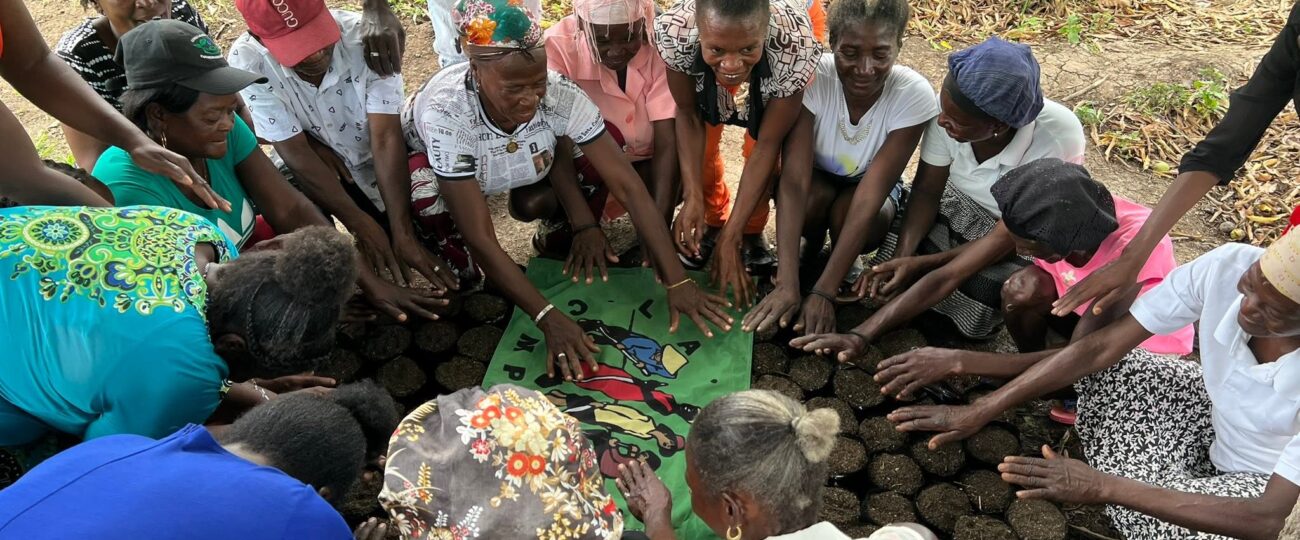
As a peasant woman and feminist activist, I speak from the concrete reality of Haitian women. They are the ones who cultivate the land, feed their families, and keep their communities alive. And this is not only about Haitian women: it is about rural women everywhere.
It is important to talk about this issue, particularly in terms of the political and ideological position we defend and our understanding of grassroots feminism. It is a feminism built by women who work as vendors, women from working-class neighborhoods, and social organizations that are driving forces in their communities, countries, and regions.
As Black and racialized peasant women, we have specific demands: the right to land, a decent income, sustainable housing, food sovereignty, and full participation in all activities and decisions in our communities.
Our ancestors endured slavery and colonization. To this day, Black peoples continue to face these forms of discrimination. Black women experience a double injustice: because they are Black and because they are women. They are victimized twice over.
In Haiti, women often face multiple forms of discrimination at the same time. First, because we come from a patriarchal society. We are Black in a world where racism still exists. We are peasant women, and public policies often overlook us. And even today, we live in extreme poverty.
When we say that we live in poverty, it is because the Haitian government has chosen this path, in complicity with other governments and other imperialist international institutions: a choice to isolate the Haitian people.
A Ransom, Not a Debt
Why are we, as Black women, raising these demands for reparatory justice? To recognize the crimes of slavery and colonialism, redress economic injustices, and restore the wealth that was plundered and stolen during the US occupation from 1915 to 1934. We are still living with the consequences of these occupations, and we are living under occupation at this very moment.
The current government has adopted a mining decree allowing several international companies to carry out mining activities. We know very well what mining means. There are many examples of its consequences around the world.
In Haiti, the consequences of mining operations are still visible in several communities. And women are the first to suffer those consequences. The impacts of these mining operations can still be felt in several departments across the country. Yet the current government continues to sign agreements allowing multinational corporations to exploit our wealth in Haiti.
It is time to sound the alarm internationally, calling on our allied organizations, our left-wing movements and organizations, and women who face the same fate under the dominant international order.
It is said that Haiti paid an independence debt. We do not call it a debt: we call it a ransom for independence, because it was the French government that extorted us. As Haitian social movements, we speak of a ransom rather than a debt. This history has had consequences that continue to weigh heavily on Haitian women and on the Haitian people as a whole, contributing to the poverty they face today.
In Defense of the Peoples
We produce a large share of the food. Haitian women account for around 60 percent of the national economy, and Haiti’s economy is largely based on peasant agriculture.
We, peasant women, are the ones who protect local seeds, pass on knowledge, and defend biodiversity. We organize our communities and participate in decision-making within political and other organized structures. We stand for a peasant, grassroots, and anti-racist feminism.
This reminds us that women’s rights are tied to the rights of peoples. It is important to say this and to continue bringing this agenda to the international level, keeping this history alive. We cannot talk about equality without talking about social justice, climate justice, food sovereignty, and historical reparations for Haitian women.
We are agents of change. We are the driving force of the Haitian economy. We are the ones who cultivate the land, who protect life, who resist injustice, and who build more just futures every day. And we are also the ones who must take responsibility for continuing this struggle internationally, with deep solidarity, courage, and hope, so that we can achieve collective well-being for all.
Uniting Rural Women Internationally
This international grassroots feminist framework must connect our analyses of patriarchy, racism, reparations, and collective well-being to the concrete realities of rural women, not only in Haiti, but everywhere. This will give our voices an international political dimension.
What Haitian peasant women and women from working-class neighborhoods are going through echoes the experiences of women in working-class neighborhoods across Latin America. This is a vital space for us, women from around the world, to come together across borders to put an end to patriarchy and confront US imperialism and the racist and discriminatory policies through which it is imposed.

Islanda Micherline is a peasant activist in Haiti, a member of the Union of Haitian Small Farmers (èt Kole Ti Peyizan Ayisyen) and CLOC–Vía Campesina. This text is an edited version of her public remarks during the webinar “Grassroots and Anti-Racist Feminism for Reparations and Well-Being,” organized by the World March of Women on July 25, 2026.