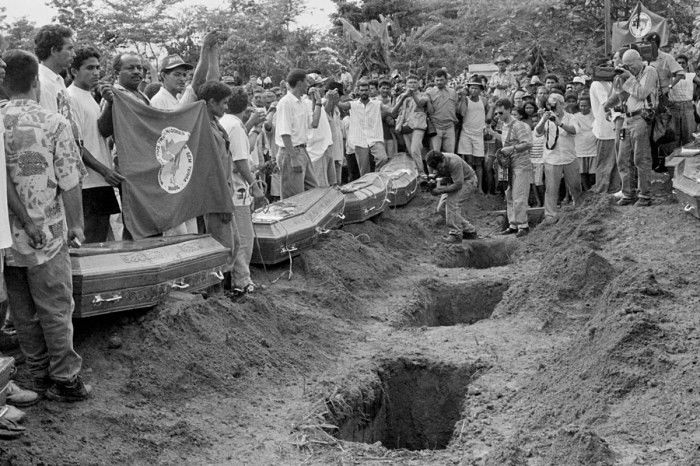
2026 marks 30 years since the Eldorado dos Carajás massacre, in the state of Pará, in northern Brazil. On April 17th, 1996, the Military Police of Pará killed 19 landless rural workers and left dozens more seriously injured. They were marching along BR-155 (then PA-150), in the municipality of Eldorado dos Carajás, fighting for the right to land. The massacre’s impunity continues to be condemned by the Landless Workers’ Movement (MST) and international peasant movements to this day. In memory of these murdered workers, La Via Campesina established April 17 as the International Day of Peasant Struggle.
Also in 1996, La Via Campesina introduced food sovereignty to the world as a political proposal to confront global systemic crises. Thirty years later, the principle of food sovereignty has been strengthened in territorial struggles and continues to guide a horizon of radical transformation of society. At the same time, capital encroaches on nature — land, water, forests, minerals — and over those who live in and care for it. Pará remains at the top of national rankings for land, environmental, and labor conflicts, including slave labor.
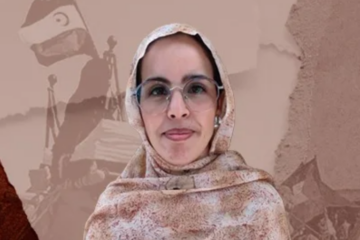
In this interview, Pará-based activist Ayala Ferreira speaks about memory and struggle. Ayala became involved with the Landless Workers’ Movement (MST) in 1999, as a young woman. She worked in the fields of political education and human rights and is now part of the organization’s national leadership. She describes how rural violence persists — through old and new forms alike.
Ayala analyzes the expansion of agribusiness, mining, and hydroelectric projects over peasant and traditional community territories, as well as the growing resistance of landless women, who play a central role in building agroecology and food sovereignty.
2026marks 30 years since the Eldorado dos Carajás massacre. What does this memory mobilize today in the MST?
The massacre marks the killing of 19 landless rural workers in a coordinated action carried out by the government of the state of Pará, which ordered the Military Police to use all means necessary to clear the PA-150 highway, now BR-155. In addition to those killed on the afternoon of April 17, 1996, dozens of others were seriously injured and still suffer today from bullet fragments lodged in their bodies.
Many feelings surface when we remember this date: the pain for those we lost in the struggle, outrage at those abandoned by the State and at the absence of any agrarian reform policy in Brazil, and, of course, the hope that the struggle will grow as we see more and more workers continuing in resistance.
It is the feeling of hope and justice that sustains our organization and our mobilization. April 17 marks the National Day of Agrarian Reform and the International Day of Peasant Struggle. The best way to honor these dates is to continue organizing landless rural workers through land occupations, vigils, marches, tree planting in honor of the martyrs of the struggle for land, political and ecumenical events in cities. All of this serves to promote debate on the importance of agrarian reform and to denounce the impunity and neglect of the Brazilian State, which continues to apply other forms of violence against those who organize and struggle for their rights.
How would you describe the current situation of land disputes in Pará? What has changed and what remains over these 30 years?
It is sad to say, but we are talking about a country with one of the highest levels of land concentration in the world. There is a lot of land for very few people, and many people without land. Landless families see organization and the struggle for access to land as the only way to break with this reality of extreme concentration. The response from the Brazilian State, a staunch ally of large landowners, is the use of violence in all its forms: threats, criminalization, torture, and killings.
Sadly, Pará leads the ranking of violence in rural areas: first in land conflicts, followed by environmental conflicts and struggles for decent working conditions, including forced labor. We can say that violence has not disappeared — it continues to operate through old and new forms of domination by large landowners and agribusiness.
What are the main forces putting pressure on territories in Pará today, and how does this affect the lives of families and communities?
Capital has advanced in rural areas through what we call the agro-mining-hydropower complex. Capital increasingly seeks to appropriate and privatize the natural commons: land, water, forests, minerals, and even air, when we refer to carbon markets. These commons are located in peasant territories, traditional communities, and protected areas that belong to all Brazilian people and are under State responsibility.
Our reading is that the search for control over these commons has intensified because the system is in crisis. The solution elites have found to continue accumulating is to commodify nature. To do so, a whole set of mechanisms is put into motion to weaken territories and facilitate privatization processes. Companies, foundations, and state agents use various strategies such as co-optation, division of communities, the discourse that projects will bring progress and development for all, criminalization through legal action, threats, disappearance of community leaders, among others. All this shows that rights such as free, prior, and informed consultation, the rights of nature, and the rights of those who relate to it differently do not apply to those who serve capital.
How have MST women been acting in defending territories and building alternatives, especially regarding agroecology and food sovereignty?
MST women have always sought to build spaces to assert themselves — and be recognized collectively — as political subjects. Their praxis has been decisive in strengthening communities in encampments and settlements and, consequently, in strengthening the MST’s territorial organization.
What do I mean by that? That women have become references in diverse and healthy agricultural production. I would go so far as to say that, in many territories, they were pioneers in both the debate and practice of agroecology, as well as in areas such as education, health, and culture. They struggle on equal terms to advance in leadership roles in associations and cooperatives, gaining control over the processing and commercialization of agricultural products. Women are the majority in the MST leadership, and this space was hard-won. Even so, we still face the challenge of breaking other chains that weigh on our movement and on society as a whole: the chains of sexism and patriarchy. These sometimes allow us to be visible in public spaces, but only as a representation, not as we truly want to be.
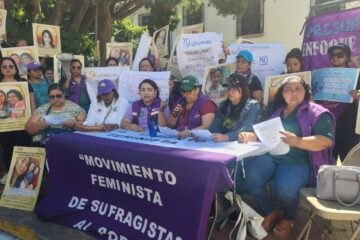
That is why landless women’s mobilizations have gained so much meaning in our movement. It is our way of saying that it is not enough to fight against large landowners and agribusiness, or to win agrarian reform settlements. We must go further and build a new society, built on relationships that are free from violence, healthy, and truly emancipating.